


A weather-ready jacket should match the rain you actually expect. A short walk through drizzle, an exposed hike in steady rain, and a windy commute all place different demands on outerwear. That is why the difference between a water-resistant jacket and a waterproof jacket matters.
This guide explains the terms, the construction details behind them, and the questions to ask before choosing a jacket. The primary search intent is water-resistant vs waterproof jacket, which is separate from our guides to lightweight work jackets, bomber jackets, fit, layering, care, and travel.
Water-Resistant vs Waterproof: The Short Answer
A water-resistant jacket is designed to shed light moisture for a limited time. It is usually a practical choice for brief drizzle, splashes, damp commutes, and uncertain forecasts. A waterproof jacket is designed as a stronger rain barrier and is the better starting point for sustained rain or longer exposure.
Those labels are useful, but they do not tell the whole story. Fabric, coating or membrane, seam construction, zippers, hood design, ventilation, and garment condition all affect real-world protection.
| Feature | Water-Resistant Jacket | Waterproof Jacket |
|---|---|---|
| Typical weather | Light drizzle and brief showers | Steady rain and longer exposure |
| Construction | Tightly woven fabric or surface treatment | Waterproof fabric or membrane, often with protected seams |
| Comfort | Often light, flexible, and easy to wear daily | More protective; ventilation becomes more important |
| Packability | Commonly compact | Varies by shell and reinforcement |
| Best use | Commutes, errands, travel, casual outdoor time | Hiking, wet-weather work, exposed trips |
What Does Water-Resistant Mean?
Water resistance means a fabric can slow moisture from entering, but it is not intended to create an unlimited barrier. A tightly woven synthetic shell may cause droplets to bead and roll away. Some garments also use a durable water-repellent finish, often called DWR, on the face fabric.
Performance depends on time and pressure. Light rain may remain on the surface, while prolonged rain can eventually wet the fabric. Pressure from a backpack strap, a bent elbow, or sitting on a wet surface can also push water through sooner.
For everyday use, that tradeoff can be sensible. A water-resistant bomber can feel lighter and less technical than a rain shell, making it easy to combine with jeans, work pants, or travel clothes.
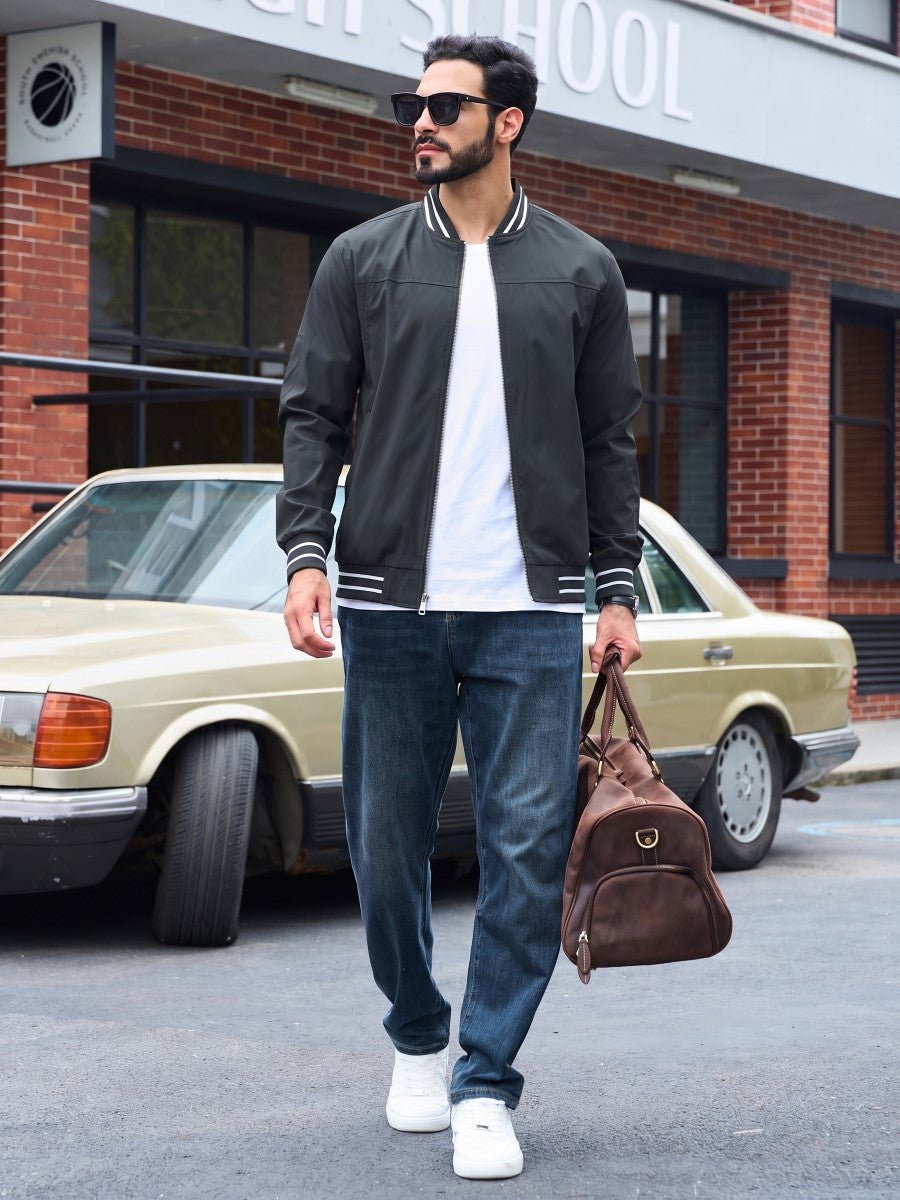
A lightweight water-resistant bomber is useful when mobility, everyday styling, and brief weather coverage are the priorities.
What Does Waterproof Mean?
Waterproof outerwear is built to provide a more complete barrier against rain. The fabric may use a coating or membrane, and the garment may protect seams so water cannot easily pass through needle holes. Hoods, storm flaps, cuffs, and water-resistant zippers can further reduce entry points.
Waterproof is still not a promise that every jacket performs the same way. Some brands publish laboratory ratings for water pressure and breathability; others use general product descriptions. Compare the stated specifications, construction, and intended activity instead of relying on one word.
A waterproof hiking jacket usually prioritizes coverage and adjustment. A hood that moves with your head, cuffs that close around gloves, and a hem that limits wind-driven rain can matter as much as the main fabric.
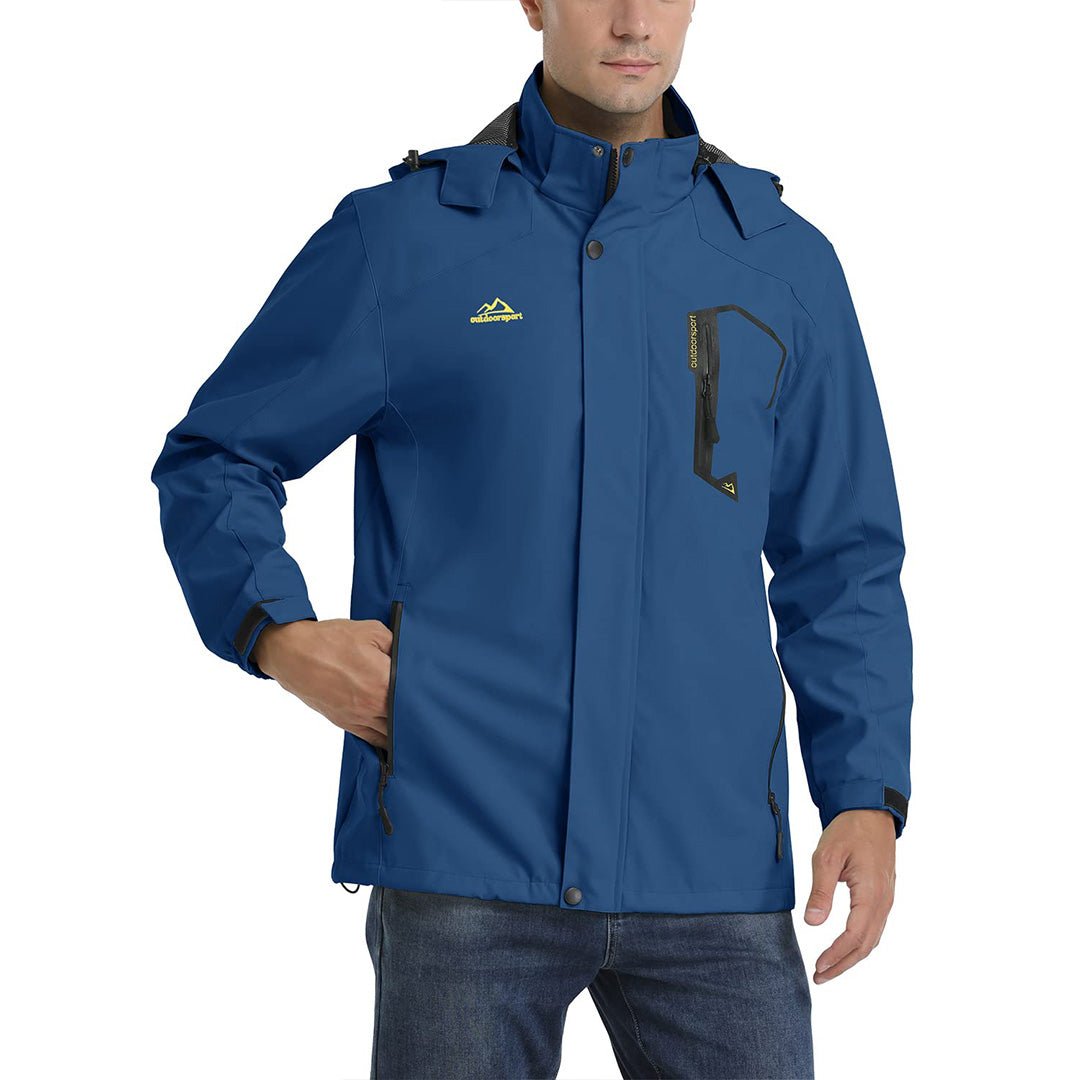
A hooded waterproof shell is designed for trips where rain coverage matters more than a casual silhouette.
Five Details That Matter More Than the Label
1. Seam Construction
Every stitched seam creates small openings. Waterproof shells may use seam tape or another protective construction to limit leakage. If the product page does not describe seam treatment, do not assume the seams provide the same protection as the fabric.
2. Hood Coverage
A hood is useful only when it stays in place and preserves visibility. Check whether it adjusts around the face or crown, whether the brim directs water away, and whether the collar closes comfortably. For cycling or helmet use, verify compatibility rather than simply sizing up.
3. Front Closure and Pockets
A front zipper can become an entry point in hard rain. Storm flaps, coated zippers, and zipper garages add protection. Pocket placement also matters: low pockets may sit under a backpack hip belt, while chest pockets can remain easier to reach.
4. Ventilation and Breathability
Rain protection and comfort are related, but they are not identical. Movement generates heat and moisture inside a jacket. A breathable fabric, mesh lining, pit vents, or an adjustable front zipper can help release heat. During high-output activity, slowing down or opening vents may keep you drier than adding another layer.
5. Fit Over Your Layers
Test the jacket over the shirt, fleece, or sweater you plan to wear. Raise both arms, reach forward, and rotate your shoulders. The hem should remain useful without the shoulders pulling tight. Too much extra volume can flap in wind, while a tight shell can restrict movement and compress insulation.
Which Jacket Fits Your Day?
Daily Commute
For a short walk between a car, train, and office, water resistance may be enough. Look for a light shell, secure pockets, and a collar that blocks wind. If your route includes an uncovered walk in frequent heavy rain, move up to a waterproof hooded option.
Weekend Travel
Check the forecast and the amount of time you will spend outside. A water-resistant jacket is easy to wear through airports and around town. For destinations known for persistent rain, pack a waterproof shell that can layer over your travel clothes.
Day Hiking
On an exposed trail, weather can change faster than it does in town. A waterproof shell with a hood offers a safer margin for sustained rain. Pair it with a moisture-managing base layer, and keep cotton layers for dry, lower-output conditions.
Outdoor Work
Consider exposure time, abrasion, and how often you bend or kneel. A tougher water-resistant jacket may suit brief showers and active tasks. Continuous rain calls for purpose-built waterproof outerwear and compatible rain pants.
How to Read a Product Description
- Water-resistant or water-repellent: suited to light moisture unless stronger performance is specifically stated.
- Waterproof: look for supporting details such as coated fabric, membrane construction, protected seams, and a hood.
- Windproof: describes wind blocking and does not automatically mean waterproof.
- Breathable: describes moisture-vapor movement; comfort still depends on activity, humidity, and ventilation.
- Shell: describes the outer layer. Check whether insulation or lining is included.
If a numeric waterproof rating is listed, compare it only with ratings tested under similar standards. A number alone does not reveal seam design, fit, or durability.
Care Helps Weather Protection Last
Dirt, body oils, and detergent residue can reduce how well the surface sheds water. Follow the sewn-in care label, close zippers and fasteners, and use the recommended wash method. Avoid fabric softener unless the manufacturer specifically allows it.
When water stops beading on a jacket that originally had a water-repellent finish, the finish may need cleaning, heat reactivation, or renewal with a compatible treatment. Follow the garment maker's instructions because coatings and membranes differ.
Frequently Asked Questions
Is water-repellent the same as waterproof?
No. Water-repellent usually describes the way droplets bead on a surface. Waterproof construction aims to resist water penetration through the fabric and key garment areas during greater exposure.
Can a water-resistant jacket handle rain?
It can handle light rain for a limited period, depending on fabric, finish, condition, and pressure. It is not the dependable choice for a long walk in steady rain.
Does waterproof mean windproof?
Most waterproof shells also block wind well because their barrier limits air movement. Check the product description if wind protection is central to your activity.
Why do I feel wet inside a waterproof jacket?
Perspiration can collect faster than it escapes, especially during hard activity or humid weather. Use lighter base layers, open vents, adjust pace, and avoid overdressing.
Which option is better for everyday wear?
A water-resistant jacket often provides the best balance for everyday movement and brief showers. Choose waterproof construction when your routine includes longer, less predictable exposure.
Choose for Exposure, Not Just the Forecast Icon
The best choice comes down to intensity, duration, and consequence. Water resistance is practical for quick transitions and light moisture. Waterproof construction provides a stronger barrier for sustained rain, hiking, and exposed work. Check the whole garment, plan your layers, and choose the level of protection that matches how long you will actually be outside.


