


When one pair of trousers has to move from a workshop to a trailhead and then into a casual weekend plan, the details matter. Men's utility trousers are built around practical storage, durable fabric and a comfortable cut, but the best pair still needs to feel easy during long hours on your feet. This guide explains how to assess the features that make utility trousers useful without turning them into bulky gear.
Start with the job you need them to do
Think about your typical day before comparing pockets or colors. For light maintenance, travel between sites and weekend projects, look for a balanced fabric that resists abrasion while remaining flexible. If you spend more time outdoors, a water-resistant finish and a secure waistband can be more valuable than extra decoration. The goal is to match the trouser's feature set to your routine, not to choose the pair with the longest list of specifications.
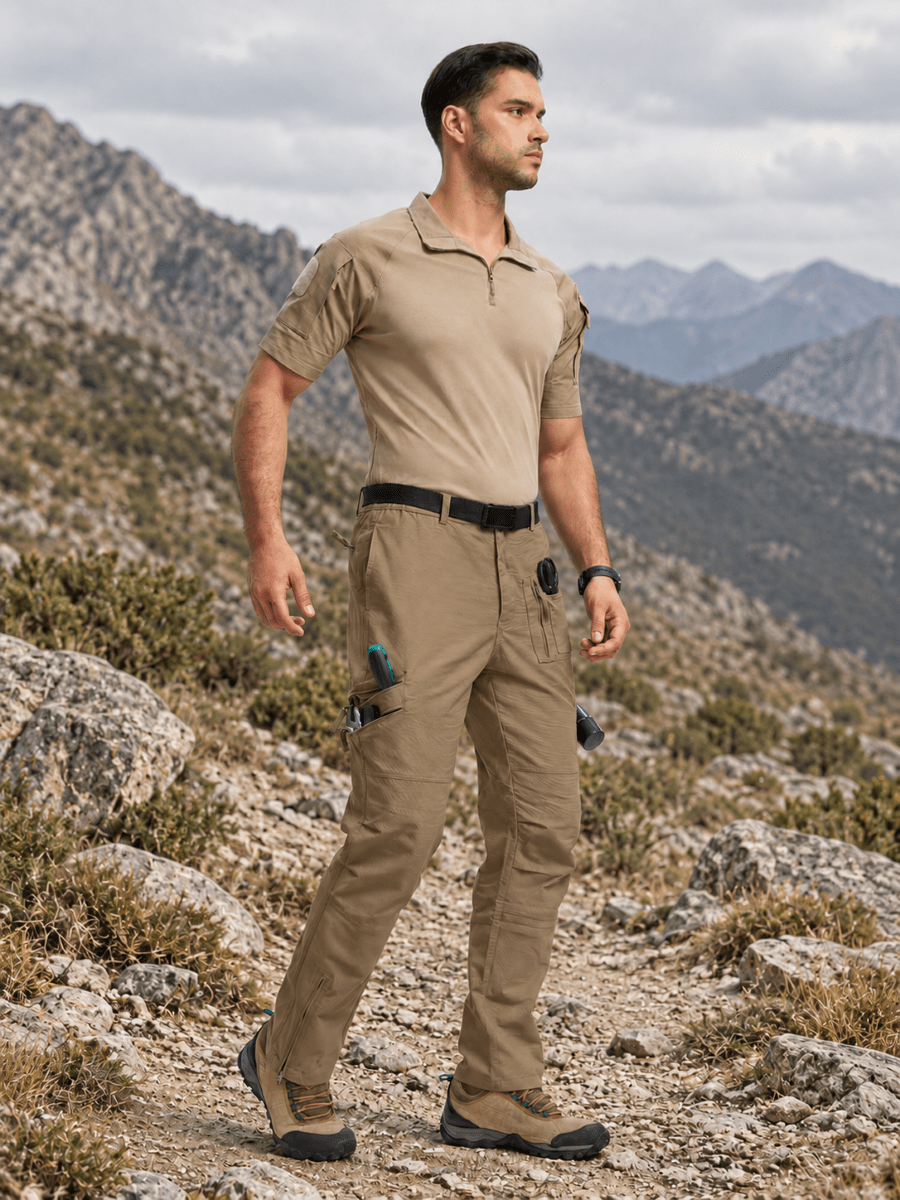
Fabric: durability with enough movement
Utility trousers work hardest at the seat, knees and pocket openings. A tightly woven blend helps reduce snagging, while a touch of stretch makes climbing steps, kneeling or loading equipment more comfortable. Run your hand across the fabric and check whether it feels substantial but not stiff. For changing weather, a light water-repellent finish can help shed brief drizzle and splashes; it is useful for everyday protection, but it should not be confused with a fully waterproof shell.
Also consider how the fabric behaves after washing. A practical pair should keep its shape, dry reasonably quickly and avoid excessive wrinkling. These qualities make men's utility trousers easier to rotate through a workweek or pack for a short trip.
Pockets that support your routine
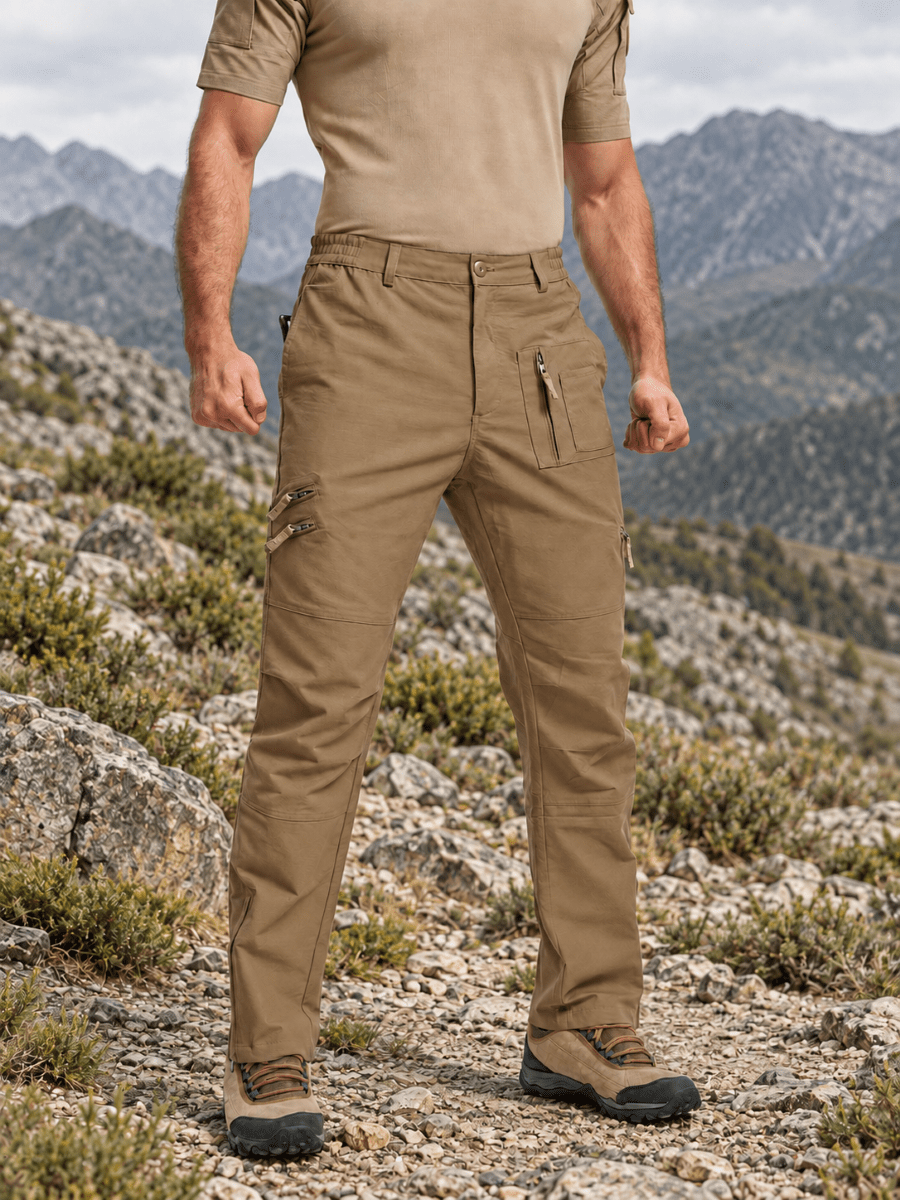
Good pocket design is about access, not simply quantity. Hand pockets should be deep enough for a phone and keys without creating pressure when you sit. Zipped or flap-secured thigh pockets can protect a wallet, compact tools or a passport while you move. If you often carry a phone, test the pocket opening with one hand and make sure the contents will not fall out when you bend.
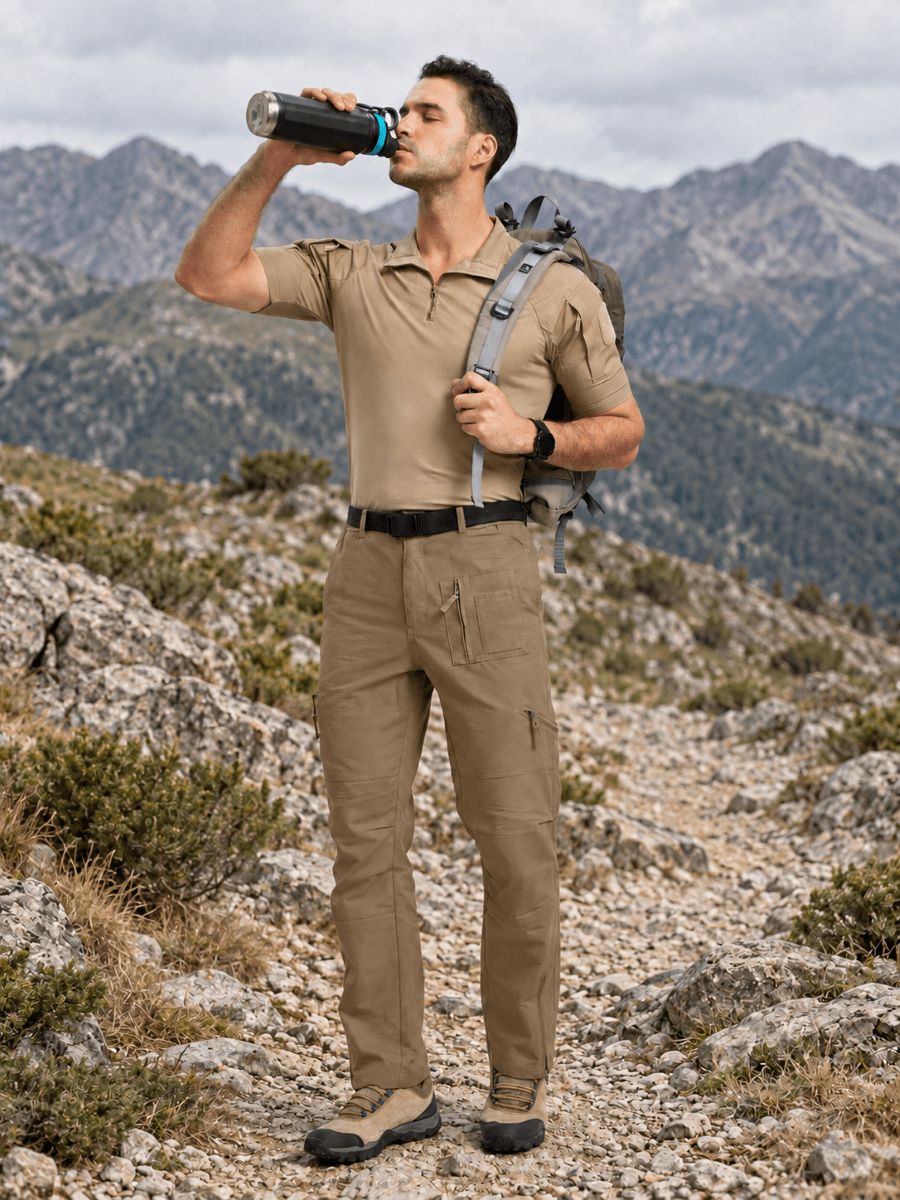
Before buying, mentally divide what you carry into daily essentials and occasional tools. Place only the first group in your most accessible pockets. This keeps the silhouette clean and prevents uneven weight from pulling at the waistband.
Fit and mobility checkpoints
A useful fit should feel secure at the waist without requiring a tight belt. Sit, squat and take a long step when trying on utility trousers. The seat should not pull, and the knees should remain comfortable when bent. A straight or gently tapered leg usually works well with work boots and everyday sneakers, while an adjustable hem can help keep fabric clear of wet ground.
- Check that the waistband stays flat when you sit.
- Make sure the rise gives you room to bend without exposing the back.
- Look for articulated or shaped knees if your day includes frequent kneeling.
- Choose an inseam that leaves a small break over your usual footwear.
Weather-ready details worth considering
For shoulder seasons, small protective details add up. A water-resistant face fabric can make a quick shower less disruptive. A button-and-zip fly helps keep the front secure, while reinforced stitching around stress points extends the life of the trousers. These features are especially helpful when you wear the same pair for errands, light outdoor work and travel.
How to build outfits around utility trousers
For a work-ready combination, pair neutral utility trousers with a heavyweight tee, overshirt and low-profile boots. On a cooler day, add a fleece or a lightweight insulated jacket and keep the color palette simple. For a weekend outfit, switch to a knit polo or relaxed sweatshirt and clean sneakers. Sand, olive, charcoal and black are easy to combine with the layers already in your wardrobe.
Keep accessories functional: a compact belt, a weather-resistant daypack and gloves are usually enough. Avoid filling every pocket; leaving some capacity makes the trousers more comfortable and preserves their clean shape.
Care tips for longer wear
Follow the care label and close zippers or snaps before washing. Turn the trousers inside out to reduce surface abrasion, use a mild detergent and avoid high heat unless the label allows it. Air-drying helps protect stretch fibers and water-repellent finishes. If the fabric begins to absorb water instead of beading it, refresh the finish with a suitable treatment rather than using fabric softener.
Final checklist
The right men's utility trousers should solve everyday problems quietly: enough storage, dependable construction, comfortable movement and a style that works beyond the jobsite. Compare the fabric, pocket placement, waistband and hem against the way you actually spend your day. When those choices align, one well-made pair can cover field days, travel and relaxed weekends with less fuss.


